Mobile pet care: From technician appointments to full-service home care
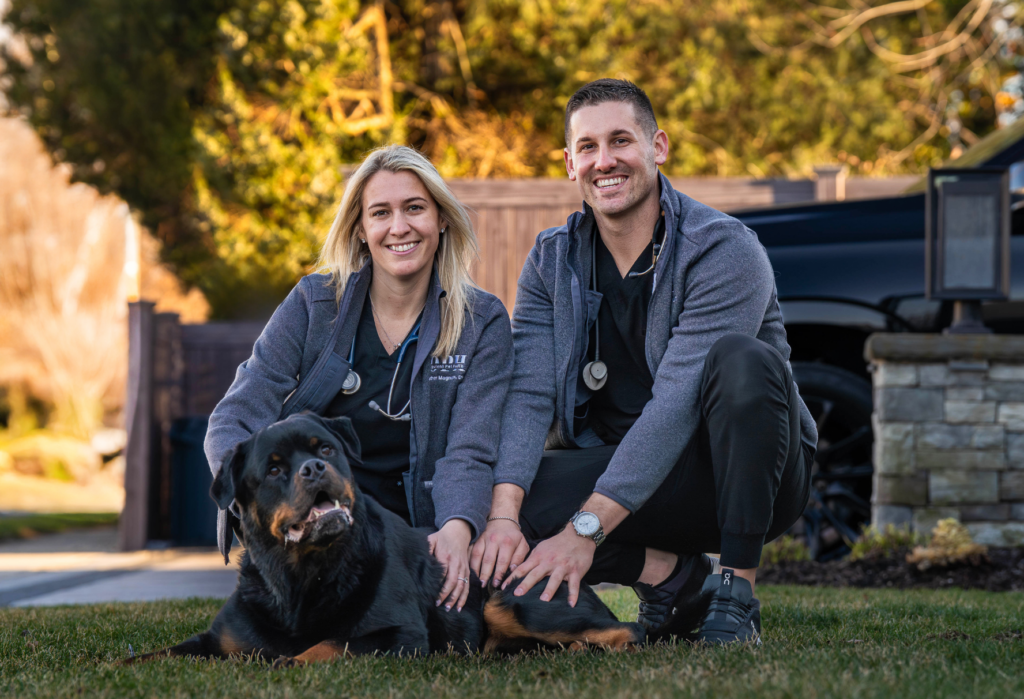
Michael Natale, LVT, identified a need for mobile pet care in his Long Island community.
Some of that need was driven by staffing shortages and a subsequent reduction in available in-clinic appointments. In other cases, it stemmed from pets who didn’t handle a clinic setting well, or clients who were unable to make it to the clinic during office hours.
“So, I said, from an LVT’s perspective, what can I do to not only cover myself as far as my license but also stay within my practice scope?” he recalled.
Before creating a plan, he connected with several local veterinarians to identify their needs. “A lot of them said bandage changes, checking on incisions, subQ fluids, and laser therapy,” he said, “and maybe helping educate the clients about end-of-life care and stuff like that.”
He began with those services in mind in mid-2024, and it went well. Really well, in fact—particularly with the laser therapy, which many clients wanted for older, bigger dogs who were challenging to get to the vet. His clients were so pleased that they frequently asked about other services, which, within the scope of his license, he could not offer.
Natale knew he could provide far more care if he partnered with a veterinarian, and based on the interest from the community, he felt it was an option worth exploring. He’d worked with Heather Magnuson, DVM, in another practice and knew she’d indicated interest in mobile work. Fortunately, she was still keen to make that move—and was excited to expand their services to provide wellness care, blood work, vaccines, and in-home euthanasia. That’s when Opulent Pet Health was formed.
Following the trends of human medicine
“The way I kind of looked at it was, we always follow the trend of human medicine, right?” said Natale. “We have so many RNs going into people’s homes, doing case management, so that’s essentially kind of like what this is.”
That approach has proven beneficial in more ways than one. For example, in one case where Natale was providing laser therapy for a dog with IVDD, he noticed a large bed sore while in the home. “I instructed the client to consider going back to the surgeon, which was great,” he said. “The dog got better quality of care because they saw me and I encouraged them to go in, because [otherwise] they probably would not have.”
Why mobile matters
Opulent Pet Health’s clientele seeks out mobile pet care for a variety of reasons:
Scheduling convenience
They work long hours or are fully booked with their kid’s schedules, and this is a more convenient way to have their pet seen at a time that works for their family.
Difficulty getting pets to the vet
Whether it’s challenging to get the pets into the car, period, or the pets struggle in a clinic setting, for some families, it’s far easier for these families to pay a bit extra to have their veterinary team come to them.
Caregiver’s physical limitations
Chasing down a cat who’s ready to swipe is tough for anyone, but especially for an older pet parent with mobility issues (and possibly delicate skin) of their own. The caregiver might not have their own car or could be incapacitated in some other way due to illness or injury.
Regardless of the reasoning, Magnuson said that the thing that remains constant is the appreciation their clients have for this mobile pet care service. “The last client we saw, they just thanked us so much,” she said. “They were like, ‘We would have never been able to bring our pet in [due to a disability],’ and it really does feel good when you can go out there, be there for the community, and help all the pets.”
The client education aspect has turned out to be even more important than the duo anticipated—especially when it comes to end-of-life care.
“One client specifically asked us for a consultation on end-of-life care, and how to make their home more functional for their pet,” said Natale. He wound up spending an hour and a half with the client, walking through the house and providing suggestions, like restricting the large dog’s access to the steep stairs and adding runners throughout the house to give him better traction. “Then, we talked about what he was eating, what’s his respiratory rate—just those little signs of knowing when to contact us, knowing what’s urgent and what’s not.”
Articulating limitations and options
Because the practice is so new, Magnuson stresses the importance of making sure clients understand what they can—and cannot—do in a home setting as a mobile pet care practice. Being upfront about the services they’re able to provide helps to set expectations and avoid disappointment if a pet ends up needing to seek care in a clinic.
“We always try to be very transparent, when we initially speak with [clients] on the phone, that we are not a full functioning clinic. We can’t perform certain diagnostics like X-rays and ultrasound, we can’t do surgery,” she said. “So some of those things that might be needed and we might recommend, ultimately you might have to go into a clinical setting to get those services done. And we always say, hey, if you have had a good relationship with your primary care vet, absolutely keep it. We love to collaborate, to be able to provide the best care for the pet because we’re just trying to help them, you know?”
Magnuson and Natale work hard to facilitate that collaboration. Magnuson initially went door-to-door to various primary care clinics in the area. “I’d just introduce myself, give them my business card, tell them what services we offer,” she said.
Learn more about creating a well-ordered referral process with the 2025 AAHA Referral Guidelines.
Natale credits Magnuson with building a strong rapport with many of the primary vets in their area, but through his other job at an emergency veterinary hospital, he’s had the opportunity to connect directly with clients. “Unfortunately, I see these pets that need to be let go, and I get asked a lot [about in-home euthanasia,” he said. “They’re like, ‘I absolutely do not want to do it in a clinic.’”
He’d always offered up the names of other companies that provided that service, but they tended to be busy or didn’t have any veterinarians available in that area. “I found that to be a problem all the time,” he said. So now, with Opulent Pet Health, he can provide them with contact information for a service he knows will be available—and he’s able to give those families some peace of mind during one of the hardest moments of their lives.
While Natale is still able to provide tech-only appointments as needed, he and Magnuson are happy with the way the community has reacted to the business they’re building together. And as the demand continues to grow, they’re continuing to look at ways to meet that home care need.
Photo credit: Opulent Pet Health
Disclaimer: Trends content is meant to inform, educate, and inspire by providing an array of diverse viewpoints. Any content published should not be viewed as an official stance, position, or endorsement by the American Animal Hospital Association (AAHA) or its Board of Directors.
link